
How ChatGPT Actually Picks Which Companies to Name
Five steps between a question and a company name, and you can be eliminated at any of them. What each step rewards, and and which two actually matter.
Five steps between a question and a company name, and you can be eliminated at any of them. What each step rewards, and and which two actually matter.
One question, four rules, five possible answers. A five-minute triage test that separates an identity problem from a content problem before you spend anything.
Six facts, stated plainly enough for a stranger to verify, plus one Organization block. The cheapest page on your site to fix and the one most likely doing nothing.
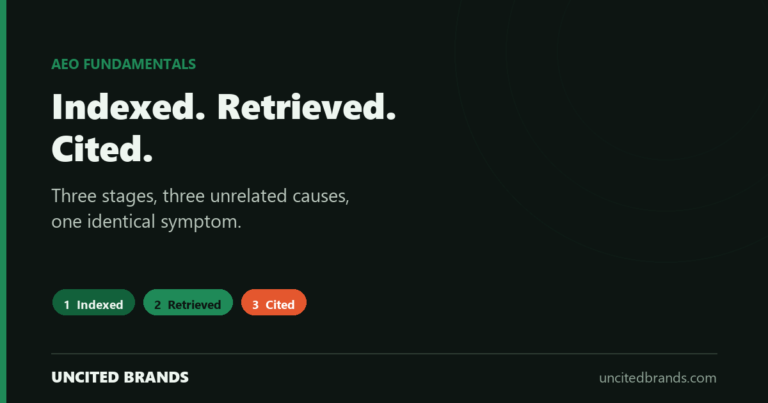
A company can be indexed everywhere, retrieved often and still never cited. Three stages, three unrelated causes, and the fixes have almost nothing in common.
The full protocol, published before the results rather than after. Fixed question sets, four engines, repeated runs, denominators stated, and the weaknesses named.
Buyers are adding AI to an already crowded research process rather than replacing it. Four shifts worth planning for, three we would not bet on, and what survives either way.
Overviews draw on the ordinary index, so eligibility is not the hard part. What separates the brands that get named is mostly what other people publish about them.
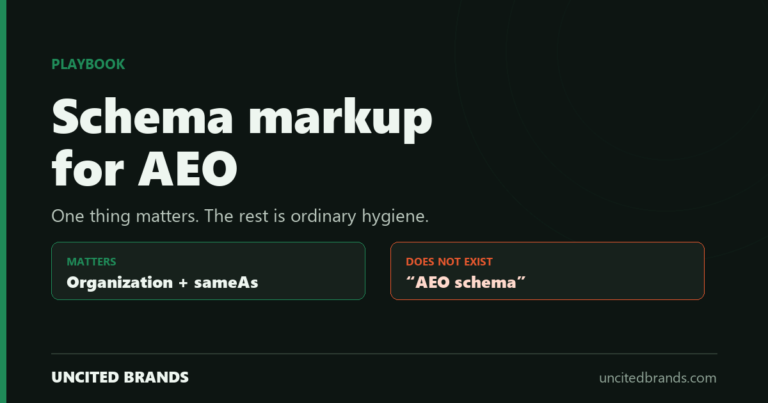
One thing matters, which is stating which entity your brand name refers to. Everything else is ordinary SEO hygiene. With the two blocks worth copying.
One unaided prompt, four rules for running it properly, and five possible results with what each one actually means.
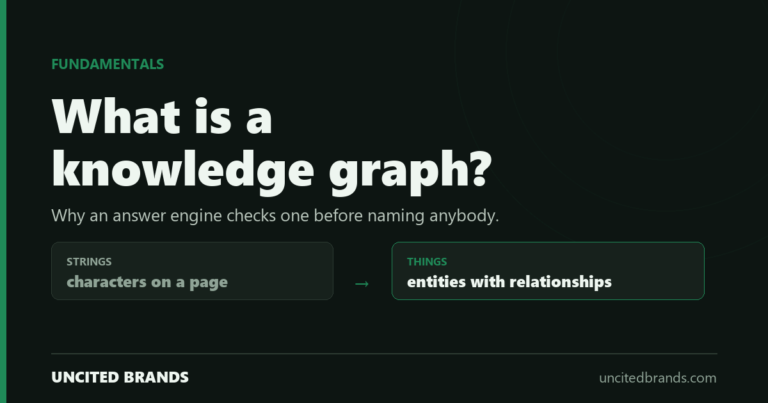
Things, not strings. What a knowledge graph holds, why an answer engine consults one before naming anybody, and the difference between the graphs you can read and the ones you cannot.