
Indexed, Retrieved, Cited: Three Stages Most Teams Collapse Into One
A company can be indexed everywhere, retrieved often and still never cited. Three stages, three unrelated causes, and the fixes have almost nothing in common.

A company can be indexed everywhere, retrieved often and still never cited. Three stages, three unrelated causes, and the fixes have almost nothing in common.
The full protocol, published before the results rather than after. Fixed question sets, four engines, repeated runs, denominators stated, and the weaknesses named.
Buyers are adding AI to an already crowded research process rather than replacing it. Four shifts worth planning for, three we would not bet on, and what survives either way.
Overviews draw on the ordinary index, so eligibility is not the hard part. What separates the brands that get named is mostly what other people publish about them.
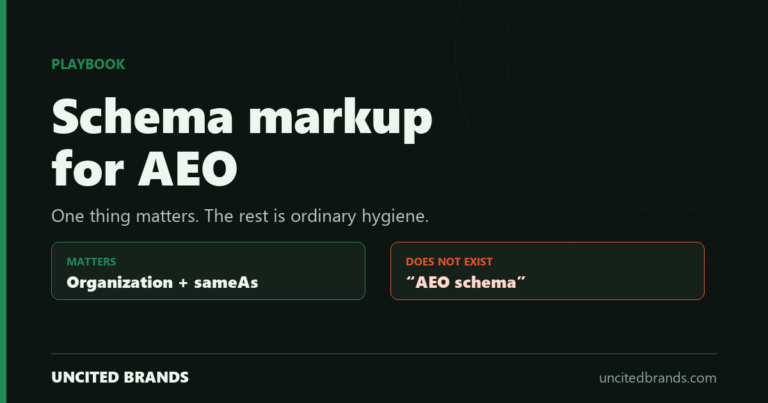
One thing matters, which is stating which entity your brand name refers to. Everything else is ordinary SEO hygiene. With the two blocks worth copying.
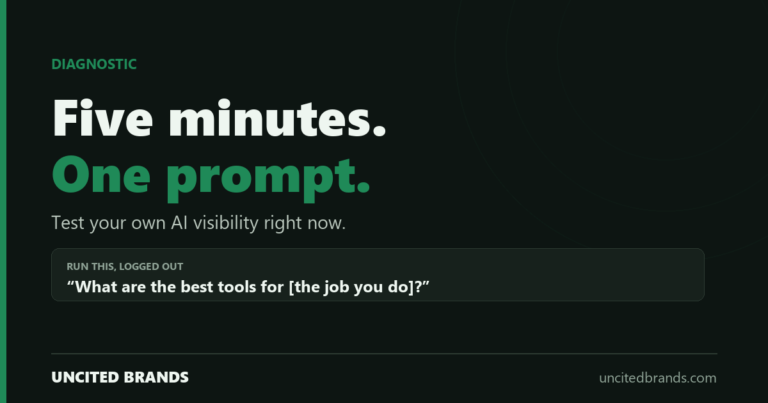
One unaided prompt, four rules for running it properly, and five possible results with what each one actually means.
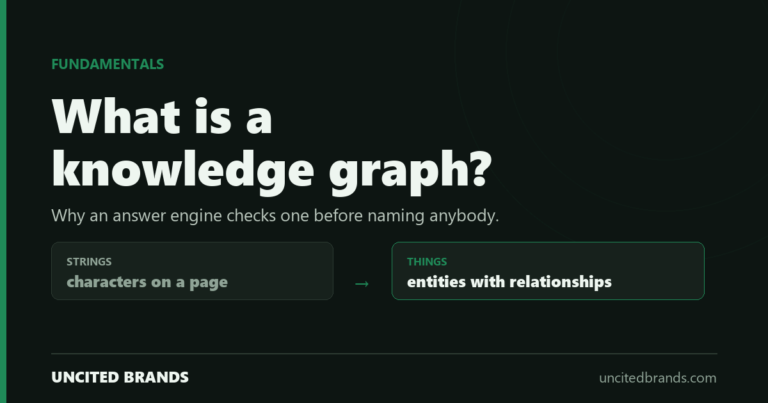
Things, not strings. What a knowledge graph holds, why an answer engine consults one before naming anybody, and the difference between the graphs you can read and the ones you cannot.
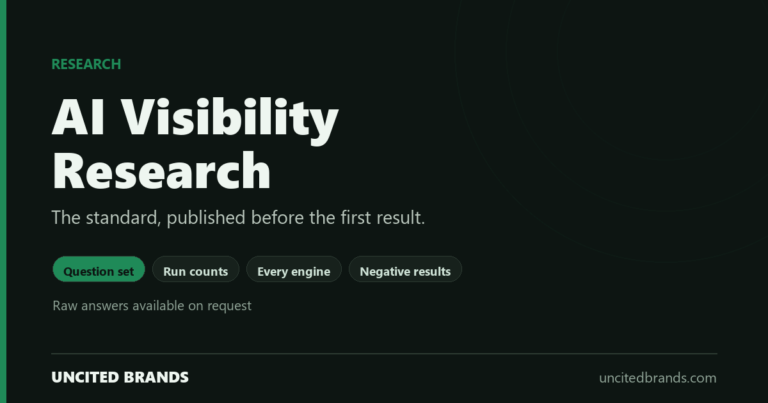
The standard every study here has to meet, published before the first result rather than after it. Fixed question sets, stated run counts, named engines, and the findings that go against us.
Twelve questions to ask, what the answers tell you, what the work costs, and the cases where building in-house is the better call. Written to be useful if you never hire anyone.
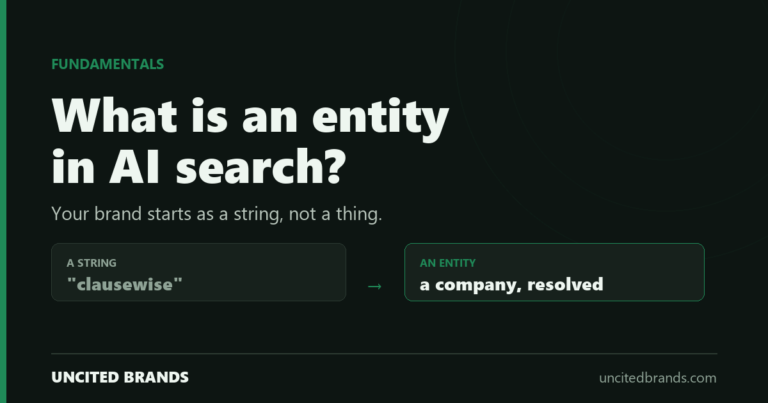
An entity is a thing a machine can tell apart from every similar name. Your brand starts as a string. The three steps it has to survive to become the other kind of object.